


Import Horses from Namibia
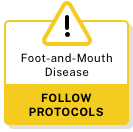
Certain regions of this country are affected with FMD; horses embarking from or transported through a region with FMD will be required to complete FMD mitigations prior to or upon arrival to the United States. For more information, visit Animal Health Status of Regions.
Horses imported to the United States from screwworm-free regions transiting screwworm-affected regions via air, land, or sea will require a minimum of 7 days in quarantine at an APHIS-approved equine import quarantine facility.
Horses Importing into the United States From Countries Affected With AHS
APHIS considers certain countries to be affected with African horse sickness (AHS). If you are seeing this message, you are seeking information about the requirements to import a horse from a country considered affected with African horse sickness.
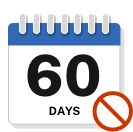
Horses traveling from AHS-affected countries have specific restrictions and requirements that must be adhered to, or fulfilled, during the importation process to prevent the introduction of AHS into the United States. All horses entering the United States from AHS-affected countries must undergo a 60-day post-arrival quarantine in a specially designed USDA Animal Import Center. Horses will be kept inside and under strict biosecurity measures for the entire 60-day quarantine procedure. Currently, the only approved facility to handle these horses is the New York Animal Import Center (NYAIC). Advanced notice is required for the importation of horses from AHS-affected countries as modifications to the NYAIC facility may be necessary to house these horses.
Besides the extended quarantine period, there are no other AHS-specific quarantine restrictions beyond those required for the other diseases of concern, if any, when importing a horse into the United States (see below).
Horses from screwworm-affected countries must complete pre-export treatment and other requirements as part of established import protocols. For more information, see the protocols below and view APHIS-approved products.
Horses Importing into the United States From Countries Affected With Screwworm
The fly species that lay screwworm larvae in living tissue has been eradicated from the United States but is found in Mexico, Central America, South America, the Caribbean, Southeast Asia, India, and Africa.
- Any horse importing from screwworm-affected regions must have a veterinarian treat the horse with ivermectin or an APHIS-approved systemic product 3 to 5 days prior to the date of import into the United States according to the recommended dose prescribed on the product's label.
- Horses must be examined for screwworm by a full-time salaried veterinary official of the exporting country within 24 hours prior to shipment to the United States. The official must fully examine the horses, including their external genitalia. If horses are found to be infested with screwworm, they must be treated until free from infestation.
- At the time horses are loaded onto a means of conveyance for export, a veterinarian must treat any visible wounds on the animals with a solution of coumaphos dust at a concentration of 5% active ingredient or or an APHIS-approved topical product.
- Horses must be accompanied to the United States by a certificate signed by a full-time salaried veterinary official of the exporting country. The certificate must state that the horses, including their external genitalia, have been thoroughly examined and found free of screwworm.
- Horses must be quarantined upon arrival in the United States at an APHIS animal import center for at least 7 days.
- Horses must be examined for screwworm by a veterinarian within 24 hours after arrival at an APHIS animal import center in the United States. The examining veterinarian must examine horses, including their external genitalia, to determine whether the horse is infested with screwworm.
- Horses must be held at the animal import center for a minimum of 7 days. On day 7, prior to the horses' release, the horses must be examined by a veterinarian at the expense of the owner or broker. For this examination, male horses must be tranquilized or sedated so that the external genitalia of the horses can be thoroughly examined. If screwworm is found during this examination, the horses must be held in quarantine and treated until free of infestation.
Horses Importing into the United States From Countries Affected With FMD
The official health certificate should document that the horse is importing form a country affected with foot-and-mouth disease (FMD). The health certificate accompanying the horse must be endorsed by a full-time salaried veterinarian of the agency responsible for animal health of the national government of the exporting country (the competent veterinary authority).
The health certificate should state:
- Within 5 days prior to export, the horse has not been on any premises or quarantined area identified to be affected with FMD, nor has the horse been in contact with animals that have been in a FMD region or on an FMD affected or quarantined premise. The horse will not have direct or indirect contact with domestic or wild ruminants or swine for a minimum of 5 days before entering the USDA quarantine facility.
Health Certificate
If available, information about APHIS-approved country-specific certificate(s) may be found at the top of the page. Equines importing from countries without an approved country-specific certificate may be able to export using the APHIS Model Health Certificate. See the Veterinary Health Certificate section of the USDA APHIS | Importing Live Equines and Equine Germplasm into the United States webpage for details.
Available Ports
The New York Animal Import Center is the only quarantine premises that accepts horses from AHS countries.
Quarantine Information
Horses coming from this country are a high risk of harboring and spreading African horse sickness (AHS) and require a minimum of 60 days in quarantine before entering the United States.
The New York Animal Import Center is the only quarantine premises that accepts horses from AHS countries.
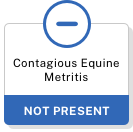
Blood tests for dourine, glanders, equine piroplasmosis, and equine infectious anemia will be performed on arrival at NYAIC. Horses must test negative for all of these diseases and must show no signs of illness in order to be released from quarantine. If originating from a country APHIS considers to be free of contagious equine metritis, they will be released after completing the initial quarantine without any further testing.
To officially enter the United States, horses from this country will require:
- An official health certificate, issued by the exporting country.
- An import permit, issued by the National Import Export Services.
- A reservation at NYAIC, as well as at an approved CEM quarantine facility, if applicable.
Fees and Permitting
The processes and fees involved with importing horses and other equine, as well as equine germplasm (semen, embryos, and cloning tissue), depend on the conditions of entry.
Importers should apply for an import permit online using APHIS eFile. This will expedite the permitting process and enable users to track the status of their permits, confirm receipt, and easily renew or amend existing permits. Visit Animal Health Permits to learn more about applying for an import permit, including paper applications.
Costs are associated with providing services for importing and transiting horses at airports, ocean ports, rail ports, land border ports, and southern border port and animal import center quarantines.
The fees billed are per individual horse. Charges for combined shipments may be split between brokers.
Overtime rates apply for after-duty hours, weekends, and holidays for inspection services. (9 CFR 130.30)
There is a comprehensive fee for horses staying at a Federal quarantine center with a decreasing scale: days 1 to 3, days 4 to 7 and 8 through subsequent days. The daily rate includes all administrative costs conducted during normal business hours: examination on arrival, routine veterinary care, lodging costs for feed and bedding, obtaining test samples and processing them for shipping to the National Veterinary Services Laboratories, supervision of cleaning and disinfection of trailers and stalls, receiving and releasing horse shipments, identification of each horse on arrival and release, reviewing health certificates and issuing import permits to ensure compliance with import regulations, monitoring horses while they are in quarantine, release of paperwork in Veterinary Services Process Streamlining (VSPS), and oversight of horses shipping under APHIS seal to State CEM quarantine facilities. (9 CFR 130.2)
Private quarantine facilities will bill user fees directly to importers on a quarter-hour to hourly rate. APHIS factors cost in these instances by the time spent for each service, which includes travel time to ports and airports for veterinary inspections.
Hourly rates also cover the costs of monitoring in-bond or transiting horses passing through the United States and exporting to other countries.